PPC marketing, or pay-per-click advertising, is a powerful digital marketing channel that allows businesses to drive targeted traffic to their websites by paying a fee each time one of their ads is clicked. Unlike organic search engine optimization (SEO), which relies on building authority and relevance over time, PPC offers immediate visibility and control over ad placement. This guide provides an in-depth look at how PPC marketing works, its advantages, how to set up effective campaigns, and best practices for maximizing return on investment (ROI).
At its core, PPC marketing operates on an auction system. Advertisers bid on keywords relevant to their products or services. When a user searches for those keywords, the search engine (like Google or Bing) displays ads from the highest bidders. The advertiser only pays when a user clicks on their ad, hence “pay per click.” This model ensures that advertising spend is directly tied to potential customer engagement.
The primary goal of PPC marketing is to connect businesses with potential customers actively searching for what they offer. By appearing at the top of search engine results pages (SERPs) for relevant queries, businesses can capture high-intent traffic that is more likely to convert into leads or sales. This makes PPC an essential component of a comprehensive digital advertising strategy.
Key Takeaways:
- PPC marketing enables immediate visibility by paying for ad clicks on search engines.
- Campaigns are built around keyword bidding, where advertisers compete in an auction for ad placement.
- It offers precise targeting options to reach specific demographics, interests, and locations.
- Effective PPC requires ongoing optimization of keywords, ad copy, and landing pages.
- Measuring ROI through conversion tracking is crucial for campaign success.
Understanding the Mechanics of PPC Advertising
The foundation of any successful PPC advertising strategy lies in understanding the underlying mechanics. Search engines like Google Ads (formerly AdWords) and Microsoft Advertising (which includes Bing Ads) use complex algorithms to determine which ads to show and in what order. Several factors influence this decision, with “Quality Score” being paramount.
Quality Score is an estimation of the quality of ads, keywords, and landing pages. A higher Quality Score generally leads to lower costs per click (CPC) and better ad positions. It’s calculated based on the expected click-through rate (CTR), ad relevance, and landing page experience. Advertisers must focus on improving these elements to enhance their campaign performance.
Keyword research is the bedrock of PPC. Identifying the right keywords—those that your target audience is actually using to search for your products or services—is critical. This involves using tools to discover search volume, competition levels, and user intent. Broad match, phrase match, and exact match are different keyword match types that control how closely a user’s search query must align with your target keyword for your ad to be triggered.
Ad copy is the text that appears in your advertisements. It needs to be compelling, relevant to the keyword, and include a clear call to action (CTA). Effective ad copy grabs attention, highlights unique selling propositions (USPs), and encourages users to click. A/B testing different ad variations is essential to identify what resonates best with your audience.
Strategic Campaign Setup and Management
Setting up a PPC campaign involves several critical steps. First, define clear campaign objectives. Are you aiming for brand awareness, lead generation, website traffic, or direct sales? Your objectives will dictate your targeting, bidding strategies, and key performance indicators (KPIs).
Next, structure your campaigns logically. Campaigns can be segmented by product, service, geographic location, or marketing objective. Within each campaign, create ad groups that focus on tightly related sets of keywords. This allows for highly relevant ad copy and landing pages, which positively impacts Quality Score and user experience.
Audience targeting is another vital aspect. PPC platforms allow you to target users based on demographics (age, gender, income), interests, online behavior, and even remarketing lists (people who have previously visited your website). This precision ensures your ads are shown to the most relevant audience, reducing wasted ad spend.
Bidding strategies can be manual or automated. Manual bidding gives you full control over CPC, while automated strategies, such as target CPA (cost per acquisition) or maximize clicks, leverage the platform’s AI to optimize bids for specific goals. Choosing the right bidding strategy depends on your campaign objectives and your comfort level with platform management.
Optimizing for Performance and ROI
Once a PPC campaign is live, continuous optimization is key to sustained success. Regularly review your keyword performance. Pause or remove underperforming keywords, add new relevant keywords discovered through search term reports, and utilize negative keywords to prevent ads from showing for irrelevant searches.
Landing pages are as crucial as the ads themselves. A dedicated landing page should directly address the promise made in the ad. It needs to be user-friendly, load quickly, and have a clear, singular conversion goal. A poor landing page experience can negate the effectiveness of even the best-targeted ad, leading to high bounce rates and low conversion rates.
Conversion tracking is non-negotiable. It involves setting up mechanisms within your PPC platform and website to measure desired actions, such as form submissions, purchases, or phone calls. Without accurate conversion tracking, it’s impossible to calculate your ROI and understand which aspects of your campaign are driving actual business results.
Performance metrics like CTR, CPC, conversion rate, and CPA provide insights into campaign health. Analyze these metrics regularly to identify trends and areas for improvement. For instance, a low CTR might indicate weak ad copy or poor keyword relevance, while a high CPA could signal issues with your landing page or targeting.
PPC vs. SEO: A Strategic Complement
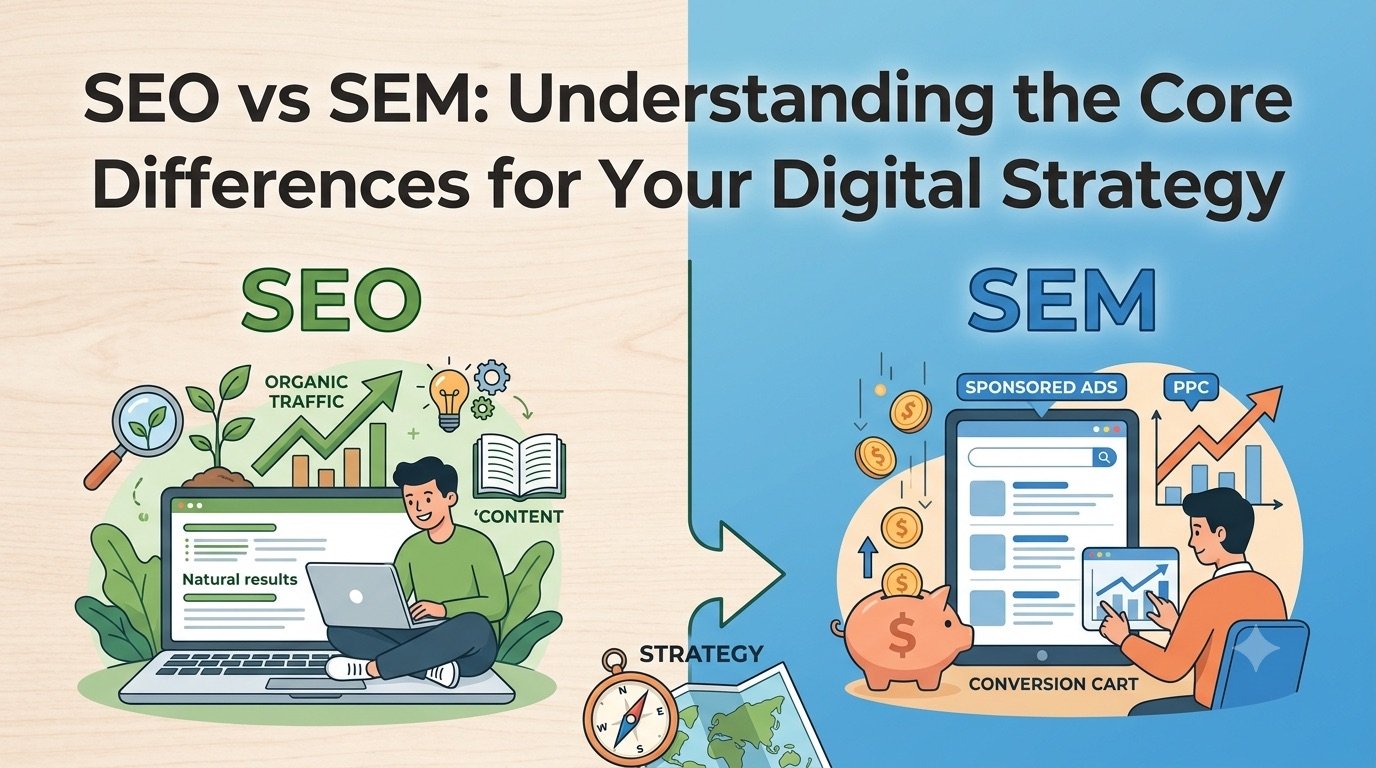
While both PPC marketing and SEO aim to improve a website’s visibility in search engines, they achieve this through different means and offer distinct advantages. PPC provides immediate results; you can launch a campaign today and see traffic and conversions tomorrow. SEO, on the other hand, is a long-term strategy that builds sustainable organic visibility over months or years.
PPC allows for precise control over messaging, targeting, and budget. You can test different offers and promotions quickly. SEO’s organic results are less predictable and take time to build. However, organic traffic from SEO is often considered more trustworthy by users, and once achieved, it can be more cost-effective in the long run as you don’t pay per click.
The most effective digital marketing strategies often integrate both PPC and SEO. PPC can be used to test keywords and offers that can then inform your SEO strategy. Conversely, strong organic rankings can sometimes complement PPC by providing a secondary point of visibility on the SERP. For many businesses, especially those in competitive markets or offering niche services, a robust PPC presence is essential for immediate lead generation while SEO efforts mature. This integrated approach ensures a comprehensive online presence and maximizes reach.
Advanced PPC Strategies and Considerations
Beyond the fundamentals, advanced PPC strategies can further refine campaign performance. Dynamic Search Ads (DSAs), for example, allow Google to automatically target relevant searches based on your website content, which can be useful for large inventories or rapidly changing product lines. Automated bidding strategies, when configured correctly, can significantly improve efficiency by letting the platform’s machine learning optimize for your specific goals.
Remarketing (or retargeting) is another powerful technique. It allows you to show ads to users who have previously visited your website but did not convert. This keeps your brand top-of-mind and encourages them to return and complete the desired action. It’s a highly effective way to re-engage potential customers who have already shown interest.
Understanding user intent is crucial for advanced keyword management. Not all clicks are equal. A search for “buy red shoes” has a much higher purchase intent than “red shoes fashion.” Segmenting keywords by intent level allows for more tailored ad copy and landing pages, leading to higher conversion rates. This level of granular control is a hallmark of effective PPC marketing.
For local businesses, geo-targeting and location extensions are vital. They ensure ads are shown to users within a specific geographic radius, and extensions provide direct contact information like phone numbers and addresses within the ad itself. This is particularly important for businesses like a home services marketing agency that rely on local clientele.
Frequently Asked Questions about PPC Marketing
What is the average ROI for PPC marketing?
The average ROI for PPC marketing can vary significantly based on industry, campaign management, and targeting effectiveness. However, many businesses report ROIs ranging from 2:1 to 4:1, meaning for every dollar spent on ads, they generate two to four dollars in revenue. Some highly optimized campaigns can achieve much higher returns.
How long does it take to see results from PPC?
PPC marketing can deliver results almost immediately. Once a campaign is set up and approved, ads can start appearing in search results within minutes or hours. Significant traffic and lead generation can be observed within the first few days, though substantial optimization and consistent performance take weeks and months.
What are the biggest mistakes to avoid in PPC?
Common mistakes include poor keyword research, neglecting negative keywords, weak ad copy, irrelevant landing pages, lack of conversion tracking, and insufficient campaign optimization. Failing to monitor performance regularly is also a critical error that hinders success.
Can small businesses afford PPC marketing?
Yes, small businesses can absolutely afford PPC marketing. The beauty of PPC is its budget flexibility. You can set daily or campaign-wide budgets, controlling exactly how much you spend. Starting with a smaller budget and scaling up as you see positive ROI is a common and effective approach.
How do I choose the right keywords for my PPC campaign?
Choose keywords by first brainstorming terms your ideal customer would use. Then, use keyword research tools to analyze search volume, competition, and relevance. Prioritize keywords with clear commercial intent (e.g, “buy”, “quote”, “service”) and consider long-tail keywords (more specific phrases) which often have lower competition and higher conversion rates.
In conclusion, PPC marketing is a dynamic and highly effective channel for businesses looking to drive targeted traffic and achieve measurable results. By understanding its core principles, setting up campaigns strategically, continuously optimizing performance, and integrating it with other digital marketing efforts, businesses can leverage PPC to achieve their growth objectives. The ability to precisely target audiences, control spending, and track ROI makes PPC an indispensable tool in the modern marketing landscape.
For businesses serious about acquiring new customers online, mastering PPC marketing is not just an option, but a necessity.
Explore more Tomosons for related guidance.