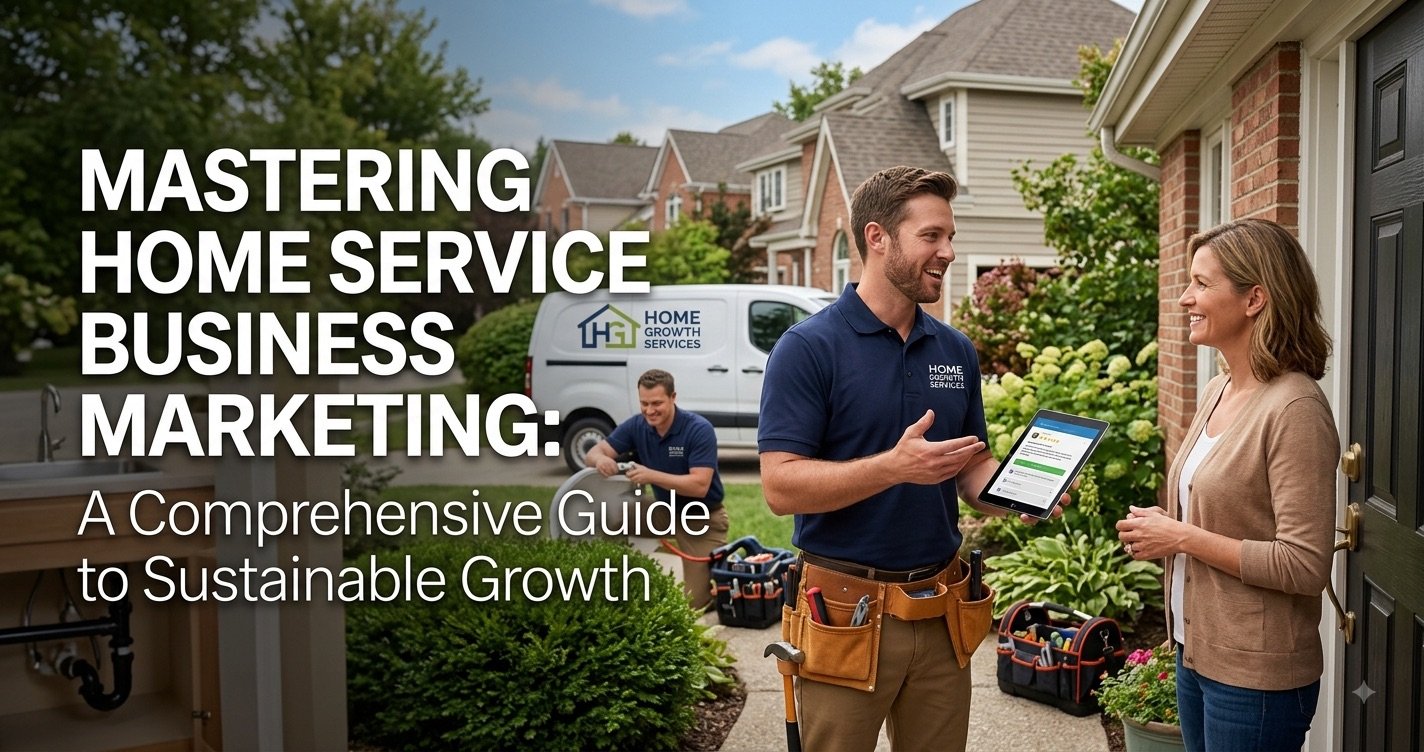
Effective home service business marketing is the bedrock of sustainable growth, moving beyond sporadic lead generation to build a predictable pipeline of qualified customers. Many businesses in this sector rely on outdated methods or scattershot approaches, leading to wasted budgets and missed opportunities. This guide provides a strategic framework for home service business marketing that focuses on building authority, trust, and consistent demand.
The core challenge for home service businesses is reaching local customers who need their services Now, while also nurturing future business. It’s about being visible when a homeowner experiences a burst pipe, a malfunctioning HVAC unit, or a need for routine maintenance. It’s also about establishing your brand as the go-to solution long before an emergency strikes.
This article will dissect the essential components of a robust home service business marketing strategy, from foundational SEO and local search optimization to advanced digital advertising and reputation management. We will explore how to attract, engage, and convert potential clients, ensuring your business thrives in a competitive local market.
Key Takeaways:
- Prioritize local SEO to capture high-intent searchers.
- Leverage online reviews and testimonials to build trust.
- Implement targeted digital advertising for immediate lead generation.
- Develop a content strategy to establish authority and attract organic traffic.
- Utilize CRM systems for efficient lead nurturing and customer retention.
Home service business marketing: The Foundation: Local Search Engine Optimization (SEO)
For any home service business, appearing prominently in local search results is non-negotiable. When a homeowner needs an emergency plumber or a reliable electrician, their first action is invariably a Google search. This is where robust Search Engine Optimization (SEO) plays a critical role.
Optimizing your Google Business Profile (GBP) is the single most impactful step. This free listing allows you to showcase your services, operating hours, contact information, photos, and crucially, customer reviews. Ensuring your GBP is fully optimized, with accurate categories, service areas, and regular posts, can significantly boost your visibility in the “local pack” – the map results that appear at the top of many local searches.
Beyond GBP, on-page SEO for your website is vital. This involves using relevant keywords that potential customers are searching for (e.g, “emergency AC repair [your city]”, “drain cleaning services [your neighborhood]”). Ensure your website content is informative, mobile-friendly, and clearly lists your services and the geographic areas you serve. Schema markup, a form of microdata, can further help search engines understand the context of your website, improving your chances of appearing in rich snippets.
Home service business marketing: Building Trust Through Online Reviews and Reputation Management
In the service industry, trust is paramount. Potential customers are inviting you into their homes, and they want assurance that you are reputable, skilled, and reliable. Online reviews are the modern-day equivalent of word-of-mouth referrals, and they significantly influence purchasing decisions.
Actively encourage satisfied customers to leave reviews on platforms like Google, Yelp, and industry-specific directories. Make it easy for them by providing direct links or QR codes. Responding to all reviews, both positive and negative, demonstrates your commitment to customer satisfaction. Acknowledge positive feedback with gratitude and address negative comments professionally and empathetically, offering solutions offline.
A consistent stream of positive online reviews builds social proof, a powerful psychological trigger that encourages new customers to choose your business. Conversely, a lack of reviews or a prevalence of negative ones can deter a significant portion of your potential customer base. This focus on reputation management is a crucial, often overlooked, aspect of home service business marketing.
Targeted Digital Advertising for Immediate Results
While SEO builds long-term organic visibility, digital advertising offers immediate lead generation. Pay-Per-Click (PPC) advertising, particularly on Google Ads, allows you to target users actively searching for your services. Campaigns can be geo-targeted to specific neighborhoods or cities, ensuring your ad spend is focused on your service area.
Google Local Service Ads (LSAs) are specifically designed for home service businesses. These ads appear at the very top of search results, above traditional PPC ads, and feature a “Google Guaranteed” badge, which adds a significant layer of trust. LSAs operate on a pay-per-lead model, meaning you only pay when a customer contacts you directly through the ad. This can be a highly cost-effective way to generate qualified leads.
Social media advertising, on platforms like Facebook and Instagram, can also be effective. You can target users based on demographics, interests, and even life events (e.g, new homeowners). While less intent-driven than search ads, social media ads are excellent for building brand awareness and reaching a broader local audience that may not be actively searching but could be receptive to your services.
Content Marketing: Establishing Authority and Attracting Organic Traffic
Content marketing is about creating and distributing valuable, relevant, and consistent content to attract and retain a clearly defined audience—and, ultimately, to drive profitable customer action. For home service businesses, this means creating content that answers common customer questions, solves their problems, and positions your business as an expert.
Blog posts are a staple of content marketing. Topics could include “How to Prepare Your Home for Winter”, “Signs You Need to Replace Your Water Heater”, or “DIY vs. Professional Electrical Work: When to Call an Expert.” These articles not only provide value to potential customers but also target long-tail keywords that may not be competitive enough for your primary service pages. This strategy is fundamental to robust internet marketing for home services.
Video content is also incredibly powerful. “How-to” videos, behind-the-scenes glimpses of your team at work, or customer testimonials can significantly enhance engagement. Distributing this content across your website, social media channels, and YouTube can broaden your reach and deepen customer connections.
Leveraging Customer Relationship Management (CRM)
A Customer Relationship Management (CRM) system is essential for managing your leads and existing customers effectively. For home service business marketing, a CRM helps you track every interaction, from the initial inquiry to post-service follow-up.
When a lead comes in, whether from a website form, a phone call, or an ad, it should be entered into your CRM. This allows you to assign it to a sales representative or technician, schedule follow-ups, and monitor its progress through your sales funnel. Automation features within CRMs can send automated appointment reminders, service follow-ups, and even solicit reviews.
Beyond lead management, CRMs are invaluable for customer retention. By segmenting your customer database, you can send targeted email marketing campaigns, special offers, or maintenance reminders to past clients. This proactive approach encourages repeat business and turns satisfied customers into loyal advocates for your brand. A well-integrated CRM is a cornerstone of efficient home service business marketing.
Email Marketing: Nurturing Leads and Retaining Customers
Email marketing remains one of the most cost-effective channels for both lead nurturing and customer retention. For home service businesses, it offers a direct line of communication to potential and existing clients.
For leads that aren’t immediately ready to book a service, an email nurture sequence can be highly effective. These automated emails can provide valuable content, highlight special offers, and gently remind them of your services. This keeps your business top-of-mind when they are ready to make a decision.
For existing customers, email marketing can be used for a variety of purposes: sending seasonal maintenance tips, announcing new services, offering loyalty discounts, or requesting feedback. Personalized emails, based on past services or customer preferences, tend to perform best. This consistent, valuable communication strengthens customer loyalty and drives repeat business.
The Power of Social Media Marketing
While search engines are crucial for immediate needs, social media platforms are powerful for building community, brand awareness, and engagement over time. For home service businesses, showcasing your work and your team’s personality can build a strong local following.
Regularly posting high-quality photos and videos of completed projects can demonstrate your expertise and the results customers can expect. Share customer testimonials, behind-the-scenes content, and tips relevant to your services. Engaging with comments and messages promptly shows that you are responsive and care about your audience.
Consider running contests or giveaways to boost engagement and reach. Partnering with local influencers or complementary businesses can also expand your visibility. Social media is not just about broadcasting; it’s about building relationships within your local community. This is a key component of modern home service business marketing.
Understanding Your Metrics: Data-Driven Decisions
Effective home service business marketing is not about guesswork; it’s about data. Regularly tracking key performance indicators (KPIs) allows you to understand what’s working, what’s not, and where to allocate your budget for maximum ROI.
Essential metrics include website traffic, lead conversion rates (how many visitors become leads), cost per lead, customer acquisition cost (CAC), and customer lifetime value (CLV). Tools like Google Analytics, your CRM, and the analytics dashboards within your advertising platforms provide this crucial data.
Analyzing these metrics helps you refine your campaigns. If one advertising channel is generating leads at a significantly lower cost than another, you might shift more budget towards the more effective channel. If a particular blog post is driving a lot of organic traffic, you might create more content on similar topics. This data-driven approach ensures your marketing efforts are efficient and effective.
Expert Tip
Don’t underestimate the power of a well-designed, mobile-responsive website. For home service businesses, a significant portion of your leads will come from mobile searches. Ensure your site loads quickly, is easy to navigate on a smartphone, and has clear calls-to-action (like “Call Now” or “Request a Quote”) that are readily accessible.
Quick Verdict
A robust home service business marketing strategy requires a multi-faceted approach combining local SEO, reputation management, targeted digital advertising, content marketing, and effective CRM utilization. By focusing on these core areas, businesses can move beyond unpredictable lead generation to achieve sustainable, profitable growth.
What are the most important local SEO factors for home service businesses?
The most critical local SEO factors include optimizing your Google Business Profile with accurate information, accumulating positive online reviews, ensuring your website has local keywords and schema markup, and building local citations (mentions of your business name, address, and phone number on other reputable websites).
How can I get more online reviews for my home service business?
Actively ask satisfied customers for reviews via email, SMS, or in-person at the end of a service. Provide direct links to your review profiles. Consider offering a small incentive, such as entry into a monthly prize draw, for leaving feedback. Most importantly, consistently deliver excellent service, as this naturally leads to more positive reviews.
Is Pay-Per-Click (PPC) advertising worth the investment for home services?
Yes, PPC can be extremely valuable, especially Google Ads and Local Service Ads. These platforms allow you to target users with immediate intent to hire. The key is to manage your campaigns diligently, focusing on relevant keywords, negative keywords, and geo-targeting to control costs and maximize lead quality. When managed correctly, it offers a high return on investment.
How often should I post on social media for my home service business?
Consistency is more important than frequency. Aim for at least 2-3 high-quality posts per week on your primary social media platforms. Focus on valuable content, engaging visuals, and community interaction rather than just sales pitches. The goal is to build relationships and brand awareness over time. This makes home service business marketing easier to compare when the next step matters.
What is the difference between lead generation and lead nurturing?
Lead generation is the process of attracting and capturing interest from potential customers. Lead nurturing, on the other hand, is the process of building relationships with those leads over time through communication and valuable content until they are ready to make a purchase. For home service business marketing, both are essential for a complete strategy.
Use home service business marketing as the benchmark when weighing the available options.
Explore more Tomosons for related guidance.
For a related internal guide, continue with what is seo servet.plus.